
New Solar Import Regulations in Pakistan – What Changed?
A friend of mine in Lahore was three weeks away from finishing a 10kW system for his DHA house when the rumors started. A few days after Monday, the supplier started charging my friend a higher price, same panels, same inverter, no explanation beyond “taxes might change.” That’s the kind of thing solar panel dealers have been through in Pakistan for most of the first half of 2026. Nobody said “new law coming” or “laws changed.” It was just a series of small regulatory adjustments that collectively have changed the rules of who is paying for what, who is the responsible party in the testing, and ultimately, who is getting to put stuff on shelves and sell it.
If you’ve procrastinated making a solar choice because you kept hearing “regulations have changed, ” then this is the most honest breakdown of what really happened, how much it costs to your wallet, and what noises have been made.
For the official rulings and notifications as they’re issued, the Federal Board of Revenue’s Customs Valuation Rulings page is the primary source worth bookmarking rather than relying on secondhand summaries.
The GST scare that wasn’t (but still cost people money)
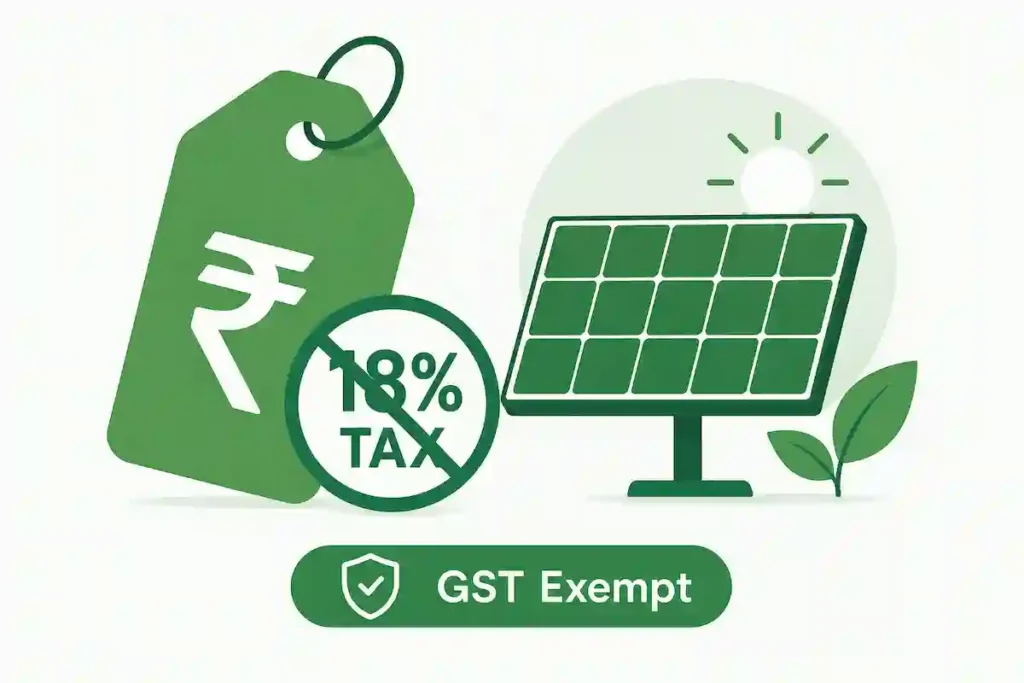
Let’s get started on the one that was so big it scared the entire solar dealer network in Karachi and Islamabad from their suppliers. Before the 2026-27 federal budget, there was strong movement backed up by some sections of the domestic panel manufacturing lobby to levy an18% General Sales Tax (GST) on imported solar panels. These were the kind of changes that would have added a Rs 5.5 lakh package to the list of things you’d have to pay for.
The revelation: when the Finance Bill was actually released in June 2026, the 18% GST wasn’t there. It turned out that panels were still the same as the old one. On paper, nothing has actually been changed. But in effect, the months of uncertainty that came before made panel prices rise up to Rs 7,500 to 9,000 per panel, with a few importers who wanted to protect themselves and others who were trying to keep up with the situation. Although the prices have come down a little after that, it really shows how things in this market can be affected by just the suggestion; there’s no law you need for it to show up on your bill. The threat itself is the weapon.
If you’re in the market for solar right now, your takeaway should be to be a bit cautious and not assume a lower price means that the dealer has taken the extra margin back fully. You can ask directly whether the price offered reflects the post-budget pricing or a risk price that was prevalent during that April, May time frame.
Customs valuation just went up, quietly.
The whole world was focused on the GST, and nobody noticed the Customs Valuation Ruling 2077 of 2026 came out of Karachi with very limited publicity – it did actually create a change. Customs valuation, through its Directorate General, revised upwards the customs assessed value of imported solar panels ahead of the budget as international market prices had soared compared to the last ruling in 2025. The value, which is considered for calculating the customs duty and other import charges, is the customs assessed value. So even if there is an exemption on GST, this base figure of determination of duties will be higher.
This is a very minor consolation. Still, the ruling also brings in that the panels which come in a semi-knocked-down(SKD) condition are valued 12.5% less than the standard customs value.
A new forced-labour guideline dealing mainly with supply chains (not your rooftop)
It won’t come through as part of your electricity bill at all. But the policy is changing the list of suppliers that Pakistani importers can work with. The Ministry of Commerce launched a new directive (SRO 704(I)/2026) targeting the strengthening of control of imports linked to forced labor and encouraging companies to switch to transparent, traceable supply chains.
Although it’s not solar-specific, it affects solar panels, most of which come from Chinese manufacturers, directly, as scrutiny about polysilicon sourcing has been growing for the last several years. In practical terms, it means larger importers and producers should no longer just submit a customs declaration, for example, and a bill of lading; rather, they will need to demonstrate due diligence on their suppliers.
For such a brand of large panels as LONGi, this is the type of regulation whose effects are already anticipated, so their expansion of ESG and supply-chain audit programs has started earlier to stay prepared for such a change in the regulatory environment. The typical buyer, for instance, one in Peshawar or Multan, won’t see much change in what a solar panel looks like or its cost, but this is the first visible instance showing that “where exactly did this panel come from” is becoming a matter of interest to Pakistani regulators and not merely just an ethical statement.
Quality control with the final touch, and you really should care about it.
If you’re the one paying the bill, this is the regulation you’ll want to pay most attention to. The biggest reason as to why Pakistan hasn’t stopped using solar energy is that it’s one of the four countries with the highest solar panel imports in the world. Still, that huge number of solar panels had mostly gone through without much quality gatekeeping being enforced meaningfully. Older P-type solar panels were simply re-purchased, relabeled, and then sold at prices that are only supposed for newer, higher-efficiency N-type solar technology, and the average buyer had no idea.
The time this change will take place is also difficult to estimate. But the Pakistan Standards and Quality Control Authority (PSQCA) is setting up its first specialized solar module testing lab, and this work is being carried out mainly by KOICA, a South Korean Governmental organisation. This process started with PSQCA’s plan to add solar panels to the mandatory-certification commodities list. Once that gets done and is fully implemented, PSQCA will get the right to draw random samples from all incoming shipments of solar panels and conduct tests for IEC compliance standards before the products may get to market.
It is the best possible news for solar panel consumers, although this change will also lead to ending the grey market panels with no paperwork phase, at least for the panels passing through the formal import channels. Before you make a purchase, if possible, find out from your retailer both the datasheet and the PSQCA or the IEC certification reference. A genuine and legal importer will not be in the least hesitant to provide this information.
Net billing doesn’t involve an import regulation, but it impacts the overall computation of imports.
On a technical level, the NEPRA’s Prosumer Regulations 2026, which substituted the old-style one-to-one net-metering system with net billing in February 2026, isn’t at all an import rule. Basically, it’s just a grid-connection regulation. It’s important to mention it here, in a way, because behind the scenes it is silently affecting the type of system people are importing parts for. Basically, under net billing, one buys grid electricity at the full retail price and can sell the surplus part back at a particularly lower price, which in turn prolongs the payback periods from earlier export-oriented systems – i.e. the old 3-5 years – even to 10-12 in some cases.
On the import side, it meant that we are moving into hybrid systems which use battery storage mainly for a day’s self-consumption rather than peak production at maximum export. If your washing machine, fan, air conditioner, and water pump operate when there’s sunshine, the new rule doesn’t necessarily mean that the payback period will be longer than four years. Though it’s advisable to check your calculations and do this carefully, if you originally intended to set up a big export-oriented system to sell the power back to LESCO or IESCO.
What a buyer of a solar system will actually experience today.
The individual rules themselves are not Most of all radical. There is no kind of ban or sudden tax increase of 18% or the market being destroyed. Still, all these measures combined – the hike in customs value assessment, the tighter supply-chain scrutiny, the actual quality testing coming next, and the grid payment scheme that favors self-consumption over export.
Make it look like the smart purchase in 2026 will have very different characteristics to those we had only a year ago. Be assured to obtain an import order from one of the suppliers who has enough documents to prove to you the quality and make your system the size which matches exactly to your electricity consumption in daytime hours and not how much of it can be returned to the grid, and above all, do not indulge yourselves in buying blindly following rumors like half of Lahore did last May.
FAQs
Is there an 18% GST on solar panels in Pakistan currently?
No. After being withdrawn during a very heated debate in June 2026, the Finance Bill does not include the proposed 18% GST on solar panels, at least for now. The panels continue to bear zero GST and duty.
Was customs duty on solar panels increased from 2026?
Import duties were kept unchanged, but the customs valuation used for the calculation was increased based on Customs Valuation Rule 2077 of 2026, raising the landed cost slightly without a new tax.
What is PSQCA and why should solar buyers care about it?
PSQCA is the Pakistan National Standards Authority, or, in their own words, standards accreditation and testing. They are setting up the country’s first dedicated solar module testing lab and plan to introduce mandatory testing for imported modules through certification in due time. That’s why they will be responsible for the quality of imports on the market.
Will my payback period be different under net billing?
Yes. Since a unit exported would now be much less valuable in comparison with an imported one, you can save; the payback periods of those solar systems that consume electricity mainly during daytime shall be really smaller compared to that of solar systems which generate a maximum amount of electricity.
Are Pakistani people still mostly relying on Chinese solar panels?
They sure are. The new Forced Labour supply chain regulations (SRO 704(I)/2026) are mainly intended to improve the transparency of this supply chain without banning the Chinese solar panels.


