
Jinko Solar Panel Price in Pakistan (July, 2026): What I Actually Paid, and What You Should
Last month, a customer visited our showroom in Rawalpindi with a screenshot from three different Facebook groups showing three “final” prices for the same Jinko 585W panel, varying from Rs 26 to Rs 44 per watt. He was not confused because he was poor at doing research. What confused him was everyone quoting him that they were right, but only about different panels with the same brand name.
This is the real issue with Jinko solar panel price in Pakistan at the moment. It’s not that it is difficult to get the information. It is that “Jinko panel” is used to mean anything from a low-grade P-Type module which has been lying with a dealer since 2024, to a brand-new N-Type Tiger Neo bifacial which has just been cleared at Port Qasim. Same name on the box, very different rupee-per-watt value.
What Jinko Panels Really Cost as of July, 2026
This week, authentic Jinko panels in Pakistan are being sold at prices roughly between Rs 28 and Rs 45 per watt, and your exact price among that range will depend almost entirely on cell technology and the age of the stock.
| Model / Type | Wattage | Price per Watt (Rs) |
|---|---|---|
| Tiger Pro P-Type Mono PERC | 545–560W | 28 – 33 |
| Tiger Neo N-Type TOPCon | 575–590W | 34 – 40 |
| Tiger Neo N-Type Bifacial | 580–615W | 38 – 45 |
| Older clearance stock (P-Type) | 500–545W | 24 – 30 |
What I just said: prices are not set in stone. They fluctuate with the dollar, and the dollar has been the main culprit in this story for the last three years. During 2022-23, when the rupee lost value against the dollar from about 180 to over 300, per-watt prices on imported panels nearly doubled overnight.
Because Pakistan imports almost the entire solar supply chain from China and settles the transaction in USD, that exchange rate is the single biggest factor that influences your final price more than the dealer’s margin, more than shipping, more than anything else. If you are going to make a purchase, you should check the interbank rate on the same day you check the panel price. They are related.
Though Jinko is not the only Tier-1 firm that you should consider before producing a signed agreement. Both Canadian Solar and JA Solar are still very close to Jinko’s per-watt pricing this month.
N-Type or P-Type: Which One Should You Actually Buy
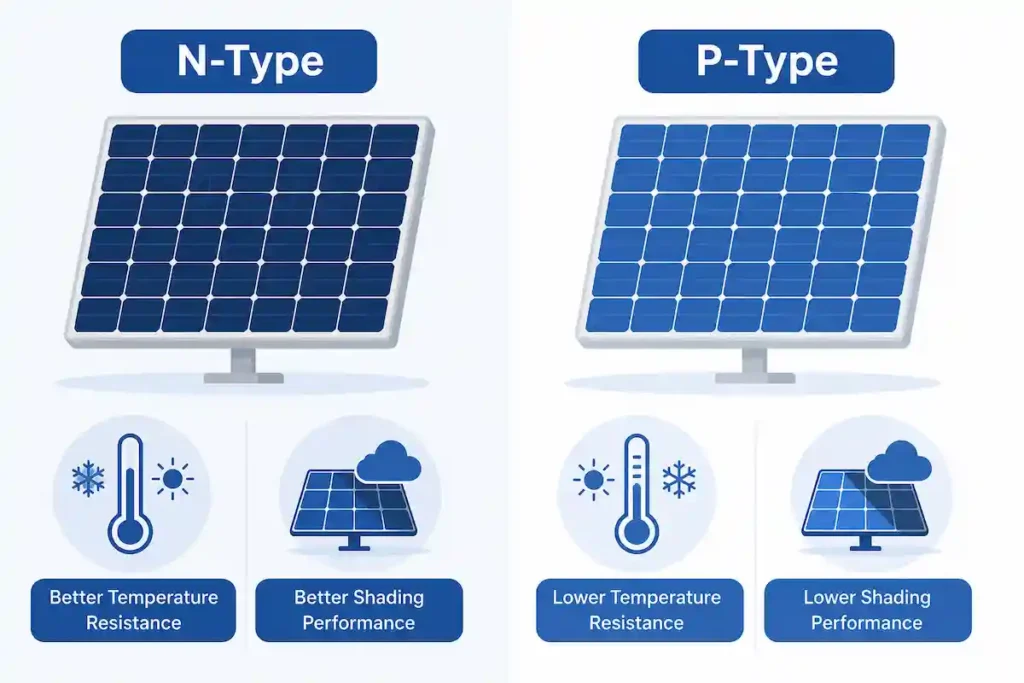
Many buyers fall into the trap of overthinking the issue, and many sellers take advantage of their fixation.
P-Type Tiger Pro panels represent the legacy, cost-effective technology: Mono PERC cells which have been trusted for years and are offered at a price that reflects their age and reliability. Typically, P-Type Jinko solar panels are the most affordable genuine Jinko panels in the market.
Definitely, if your house gets the sun for the whole day without any shading and you want to reduce the cost of installation as much as possible, then P-Type represents a very reasonable option. For example, a tube well system in Bahawalpur or a simple rooftop solar system in a smaller city where every penny in the budget counts.
N-Type Tiger Neo panels feature cells made with TOPCon technology, and they are truly superior in the same two conditions that are important in the Pakistan context: being exposed to partial shading (imagine an example of a system in Lahore’s older areas where a neighbor’s water tank or a tree throws a shadow for a certain time of the day) and the climate of a very hot day.
Jinko’s N-Type panels have a better temperature coefficient that is better, so they exhibit a smaller reduction in power as the temperature of the panel surface increases, and at a rooftop in Karachi during June when the panel surface temperature can even exceed 60C, that difference is not something that one can only theoretically argue. It actually makes an appearance in your generation log from the inverter.
What a Full System Actually Costs, Not Just the Panels
Actually, panel cost is only 35-40% of your total expenses, and this is the point at which new buyers are really shocked by a quote that looked like a bargain initially.
Consider a typical 5kW residential system, which would suit a house of average size on a 5 to 10 marla plot in Rawalpindi or Islamabad, which is capable of running a couple of ACs, a fridge, and other usual household loads. With cost, each Jinko 580W N-Type panel is approximately Rs 22,000. So, you have 9 panels = Rs. 198,000 for your solar panels.
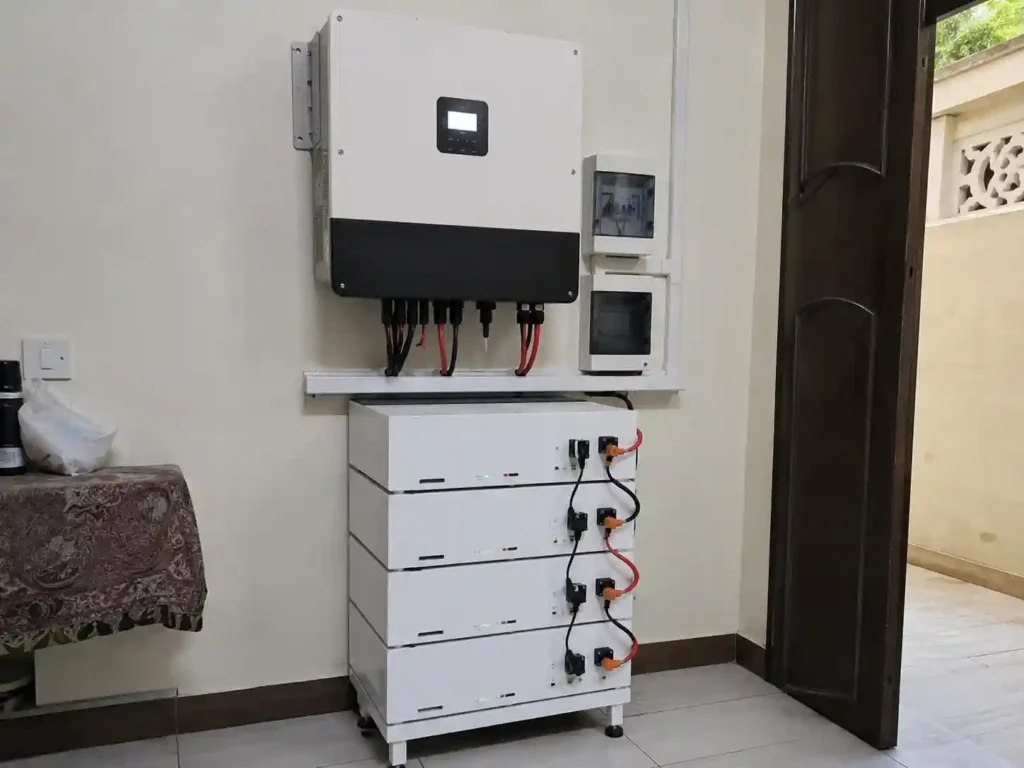
Besides this, you have to put the inverter (of Rs 130,000-180,000 range in case you go for a hybrid one. Growatt and Solis are the common mid-range picks here), mounting structure of Rs. 15,000- 20,000, wiring and protection gear around Rs. 25,000, and net metering paperwork with your local DISCO running another Rs. 35,000-50,000 one-time. Because of this, all in all, you are looking at around Rs. 5-5.8 lakh for a complete, net-metered 5kW system.
Besides, the difference between the top four brands has become so minimal that brand loyalty alone cannot justify overpaying. Of course, if you want to be very thorough before making a decision, our Longi Solar panel price and JA Solar price breakdown explain the same N-Type vs P-Type questions for these brands, model by model.
Considering the rates of IESCO or LESCO where they are, that kind of system normally reimburses the investment in three to four years, and beyond this point it is basically free electricity for the next two decades because Jinko supports its panels with a 30-year linear performance warranty which guarantees a minimum of 87% output even at the thirtieth year of operation. Many people do not grasp how important that warranty figure is. It is what distinguishes the purchase of a panel from an acquisition of two decades of regular generation.
Lessons from My Own Mistake So You Can Benefit
At a very early stage, I assisted a relative in finding panels for a small commercial installation on a rooftop in Gujranwala. We chose the cheapest “Jinko” batch blindly, without checking any serial numbers or Jinko FlashTrack verification, just the good price and dealer’s friendly nature. Six months later, two of the solar panels were making only about 85% of their rated capacity. When we finally compared the serial numbers with the Jinko website, one of the panels was not even found in the system at Jinko. It was a relabeled solar panel, not a real Jinko one.
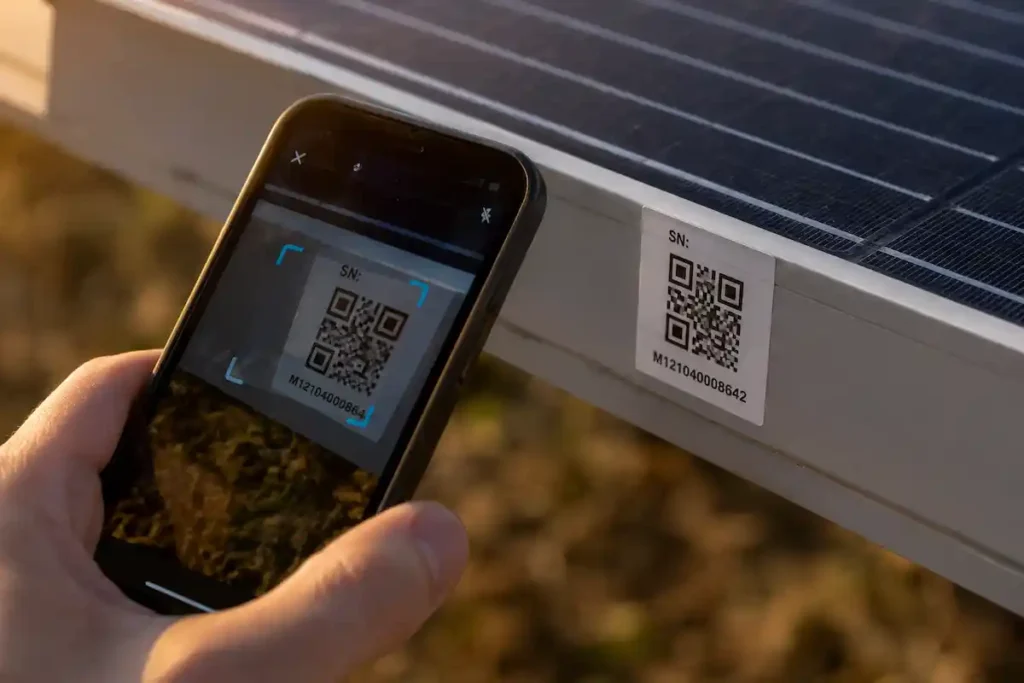
That is why I’m very strict about this issue: every solar panel’s serial number is always verified at FlashTrack, jinkosolar.com, or via Jinko’s FlashTrack app before the panel is unloaded from the delivery vehicle. It is two minutes, simple, and the only reliable defense against grey-market and mislabeled stocks, which are unfortunately so prevalent in Pakistan’s solar market that assuming good faith is not a strategy.
Common Mistakes Buyers Keep Making
Besides the fake-serial-number issue, a few other mistakes keep happening repeatedly. Some people only compare the prices per watt offered by different dealers without ensuring that the cell technology used by the panels is the same in each case, which is totally illogical and quite insulting, like comparing the price of a Suzuki Alto with that of a Corolla and getting shocked at the price difference.
Others buy solely based on the price shown at the headline and completely ignore the costs of inverters and net metering when they draw up their budget, so when the “final” bill comes, they feel totally overwhelmed. Last but not least, quite a few people get solar panels from unauthorized dealers just to save a few rupees per watt but then realize their warranty is worthless because there is no paper proof linking back to Jinko.
The Role Your Buying Location Plays
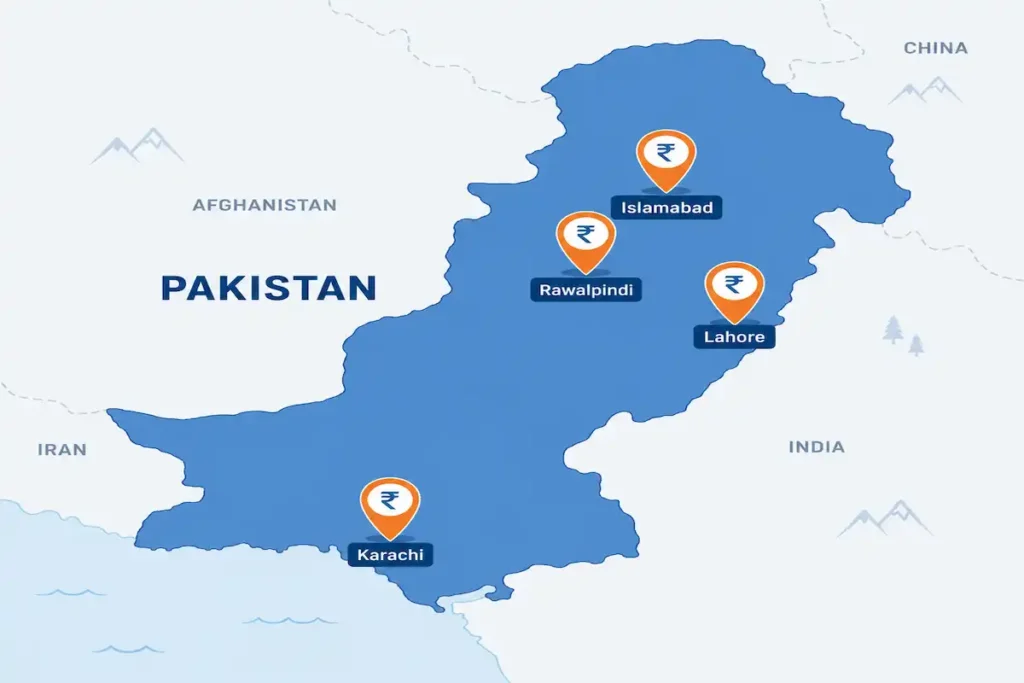
Karachi normally has the most competitive per-watt prices mainly because it is the port of entry. Panels have not only traveled less but also have passed through fewer hands. Lahore’s Hall Road and Gulberg solar markets are competitive, but since there are so many resellers, the prices will vary from one shop to another more than you would expect, even if the shops are on the same road.
In Rawalpindi and Islamabad, the prices are, on average, slightly higher, but in most of the cases you will get better after-sales service and quicker warranty honor since most authorized service centers are located in these twin cities.
Last Thought
If you ask me what the one takeaway is from all of this, it is not a price. It is the serial number verification. Prices will still follow the dollar and the import policies, and whichever figure you see today may be different by next month.
Still, a real, verified Jinko panel that comes from an authorized dealer will still be one that will bring reliable electricity in the year 2051, which is fundamentally the reason for investing such a sum.
Get a quote broken down by cell type, confirm it against the panel’s own datasheet, and don’t let a friendly conversation substitute for what’s actually printed on the invoice.