

3kW Solar System Price in Pakistan (2026) – What You’ll Actually Pay
My cousin from Gulshan-e-Iqbal gave me a call last month with an unusual question. His neighbor had a 3kW system setup, and he had paid Rs 380,000 for it, whereas a different vendor had given him the price of Rs 620,000 with a very similar proposal. The answer is that the first system was on-grid without battery backup, whereas the second one was a hybrid with backup from lithium batteries.
In Pakistan these days a 3kW solar system typically costs anywhere between Rs 350,000 and Rs 700,000. If a vendor starts quoting a certain number without knowing load shedding hours in advance, you must know that is a red flag. Really understand this point because “3kW solar price” is not just one price, which you get in your hand. Rather, it is a spectrum that you will go through as you are making choices along the way.
If 3kW is not really the size you want, or you are still comparing capacities with your actual bill, it is advisable to step back and look at our complete guide to solar system prices in Pakistan first, as it shows how 3kW, 5kW, and 10kW systems compare with each other before you decide on one size.
3kW Solar System Price in Pakistan (2026)
Numbers out of context aren’t very helpful, so allowing room for the complete version, with different configurations and the component costs that are actually included in the last invoice, we’ll break it down step by step. These are realistic market ranges for mid-2026, mainly for Lahore, Karachi, and Islamabad. Some of the small cities may be 5-8% cheaper on the installation cost but a bit higher on the transportation for panels and batteries.
| Configuration | Panels | Inverter | Battery | Other | Total |
|---|---|---|---|---|---|
| On-grid, no battery | 120k | 105k | None | 70k | 400k |
| Hybrid, 2 tubular batteries (150-185Ah) | 120k | 140k | 135k | 80k | 525k |
| Hybrid, 4 tubular batteries | 120k | 140k | 240k | 85k | 615k |
| Hybrid, lithium battery (5-10kWh) | 120k | 175k | 330k | 90k | 725k |
| Off-grid, no net metering | 120k | 150k | 250k | 85k | 625k |
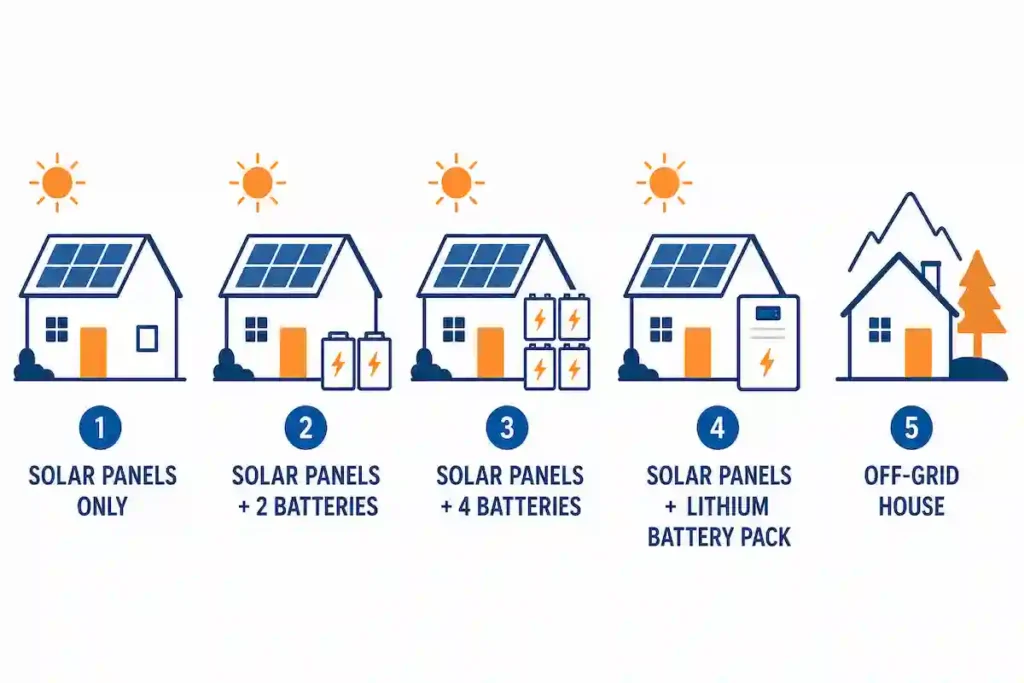
Just a quick clarification while you are reading the table: the overlapping ranges are intentional. Premium on-grid systems with high-end Longi panels and top-tier Huawei inverters. Really, it can cost more than a budget hybrid system with very basic Solis gear and tiny tubular batteries. The brand of the panel and the brand of the inverter will influence the cost, more or less equally, to whether you have a battery at all. So you should not be taking that into account. “Hybrid” always means “more expensive than on-grid.”
Location of the city can also play a role, though that factor would not be as big as people may think. Lahore and Karachi have the most number of installers. Their competition results in a slight reduction in the labor cost. If the city is small or is even a remote area, then it might cost up to Rs 15,000-25,000 per person for transport and a traveller. Especially if the installer will be bringing his crew fully from a bigger town. Be sure to ask whether the quoted price includes the net metering application fee as well. Some vendors provide the price of the equipment, and later on you are being reminded of the paperwork with your DISCO costs, which are up to 15,000- 25,000. Such an experience may feel like a bait-and-switch when it wasn’t brought to attention by anyone beforehand.
Why the Price of 3kW System Changes So Much
This is the aspect nobody explains from the beginning. There are three distinct variants of a 3 kW system under the name of it. The one that has only components and a net metering system. A system with only panels, inverter, mounting structure, wiring, and net-metering paperwork is the cheapest, and you can expect to pay around Rs 350,000 to 450,000 based on the panel brand, city, and other minor factors.
This system has a little bit of energy storage by way of a few tube batteries to provide backup during load shedding. With two 12V Tube Batteries, the battery cost is about Rs 120,000 to 150,000 extra, so the system falls into a new category of Rs 500,000 to 550,000 range.
Pick a lithium battery instead of tubular batteries, and here, besides the longer life, deeper cycle, and maintenance-free battery features, your wallet will also feel the bigger hit of the money. That is the kind of time when vendors start giving you references to Rs 650,000 and beyond. None of them is the “real price.” All these are only different products tailored for different problems.
Exchange rate also plays a role here. For an inverter and battery, even when a panel is locally assembled, import is still a sensitive part of the price. So, a negative rupee swing in a bad week for the rupee can make the price jump 5-10 percent within one day. If a vendor has to charge a price that is unexpectedly low, then find out the exchange rate for which the cost had been calculated.
What components are actually part of a 3kW system?
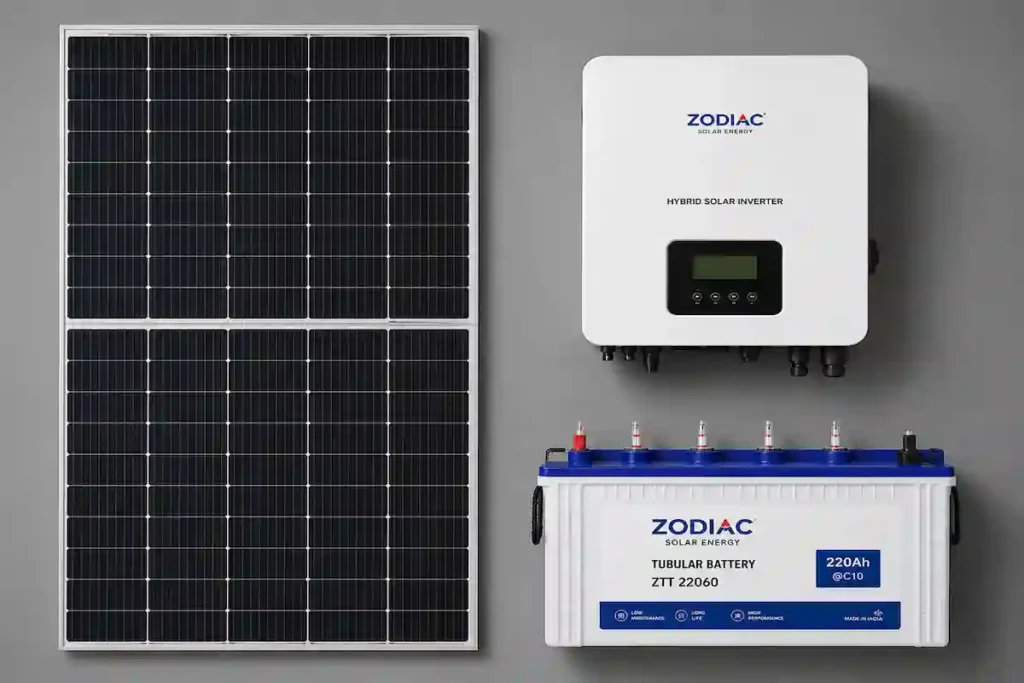
A 3kW installation generally consists of 5-6 solar panels, each in the 540W to 585W range. It includes Jinko, Longi, and Canadian Solar. I’ve noticed that the manufacturers of solar panels with the most presence on installations in Lahore and Islamabad that I’ve seen are, which are, in fact, good Tier-1 brands since global panel oversupply has kept prices at an unusually low level from 2026.55
The most crucial part, the inverter, where quality plays a major role in determining whether the installation is going to be a good one or a regretful one. Generally, a 3.5kVA hybrid inverter from either Growatt or Inverex costs around Rs 120,000 to 180,000. I have seen at least two of them dying within 18 months on systems that I am aware of. A dead inverter in the middle of summer isn’t worth more than what you saved by taking up the cheap option.
Mounting hardware, DC/AC cables, grounding, and labor costs make up the remaining part. This item is very rarely mentioned in online price lists, but an installation done quickly with low-grade wiring or a wrongly angled mount will cost you more with lost generation for the next five years than what you saved by opting for the cheapest installer.
What is the actual amount of electricity generated?
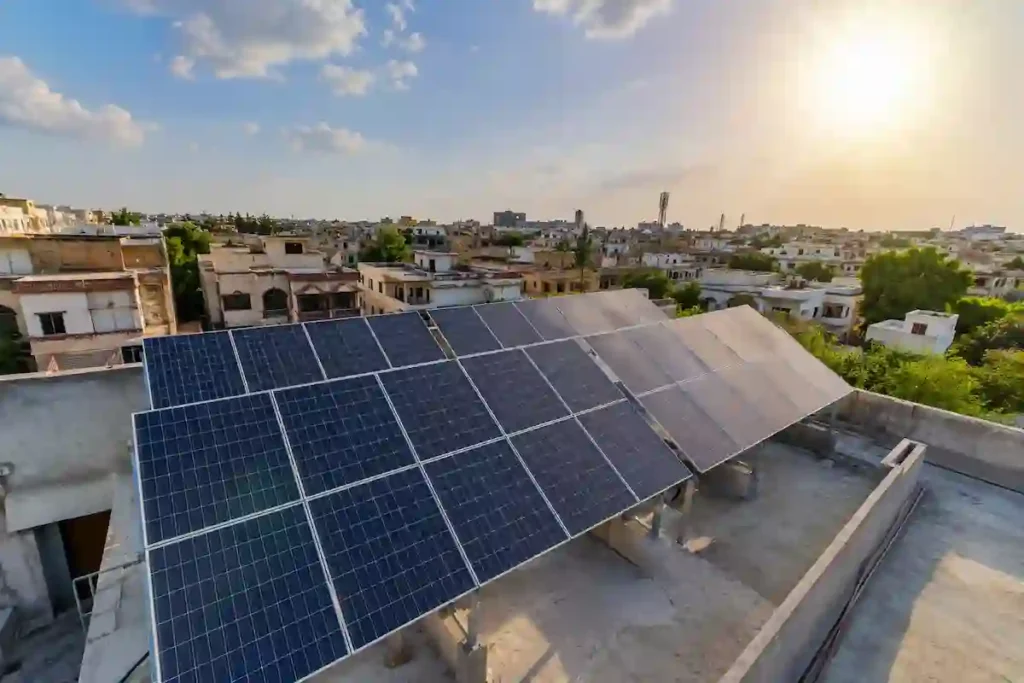
A solar energy system of 3 kW capacity angled properly delivers around 12 to 15 units per day based on the season and amount of daily sunlight. Homeowners in Multan and Bahawalpur shoulfd see the upper limit of this range whereas those in Islamabad and the northern areas receive. A lot lower units in the winter months. This way, for a whole month it would total somewhere between 350 and 450 units and it will surely meet the power requirement of an average household with fans lights a refrigerator, Washing machine, one inverter AC, etc that operate say a little over a day per month.
Your decision about whether a 3kW system is right or big enough for you depends more or less on your regular LESCO or IESCO bill per month. You’re a perfect fit for that size of solar panel system if your bill is consistently between 300 and 400 units. However, you’ll find that you have outgrown this system very quickly and be quite frustrated within a year or even so if you are drawing power for a regular consumption of 600+ units in a month because you have been running two ACs all through the hot months.
How soon will you gain back your investment, a figure really worth considering
To put simply, you should not look to the price tag. A figure of great significance is one which tells you the time it will take for the system in question to pay for itself. That will reveal to you whether this is a wise decision or an expensive one just at that.
Thanks to net metering and the current cost per unit, a Rs. 400,000 on-grid solar system is able to be repaid within approximately 2.5 to 3.5 years by a household cutting down its electricity bill by Rs 12,000 to 15,000 each month. Though, the same figure when you incorporate a battery will be more than 4 years at best if not 6 years, simply because the upfront cost involved with a battery is higher. Also the system pays you for your generation Though with a backup system you’re paying for the backup instead of the reduction of your bill.
Both are valid choices only a preference of what you’re aiming to get, saving your electricity bill or dealing with loadshedding. Many times customers have been found to be not aware of this fact and mistakenly purchasing the expensive solutions for which they weren’t really prepared!
On top of that, a point that one can remember: NEPRA’s buy-back rate change through net metering in 2026 will result in lower credit being given for the units generated. So, “just in case” oversizing of your system, to export units, will become far less profitable than it was previously – now each unit you generate for exporting instead of your direct usage will be credited less than what it was two years ago.
Common mistakes that people make
First one I am witnessing most often at this time is that they buy using just per watt price without checking if panels are actually A-grade. B-grade ones can look same as A on a datasheet, they degrade faster and you see reduced output of panels by 15-20% over three or four years.
Second mistake is purchasing cheap solar inverter (undersizing it) with a view of saving a few thousands but then later wanting to expand solar system you discover inverter is only able to handle very limited additional panels. The third thing and perhaps most costly over long term is missing the site visit. A partially shaded roof due to water tank / neighboring wall may cut production by 20-30% and there is no way expensive equipment is going to compensate for shade.
Anyone providing you a detailed cost estimate over the telephone without inspecting your rooftop is just making a wild shot here.
Final thoughts
Suppose you are a person whose energy bill is about 300-400 units monthly and you find it frustrating to see utility company cutting down your salary each month with their energy charges. A 3kW system is just the right level. It’s not cheapest at all but it’s a great and solid one if you buy the necessary parts and get the job done properly. Make sure not to get rushed into buying with claims of price hikes in coming days. They almost always try this ploy regardless of how the dollar is performing. Ask at least three vendors for quotes and have each supplier give you the separate breakdown of solar panel, inverter, and battery brands and sizes, respectively.
FAQs
Is a 3kW solar system sufficient for a house with AC?
Yes, it can support small inverter-based AC in house for couple of hours daily, but not two AC systems or continuous cooling. For heavy AC use, refer 5kW option.
To run a 3kW solar system how many batteries will be needed?
Most families would go for 2-4 lead-acid or tubular batteries or a single lithium one (say around 5-10kWh) based on how many hours of backup you actually need during loadshedding.
Is net metering worth your time in 2026?
In principle, yes. But, after 2026 NEPRA regulation buy-back rate for excess power units dropped, so it’s going to be most lucrative if you install the system about 10-20% smaller or so than your total electricity bill rather than a much bigger system that will export power you don’t actually use.
How long do 3kW solar panels usually last?
The top-tier manufacturers normally give 25-year performance warranties for their panels but real life output generally decreases by 0.5-0.8% annually.