
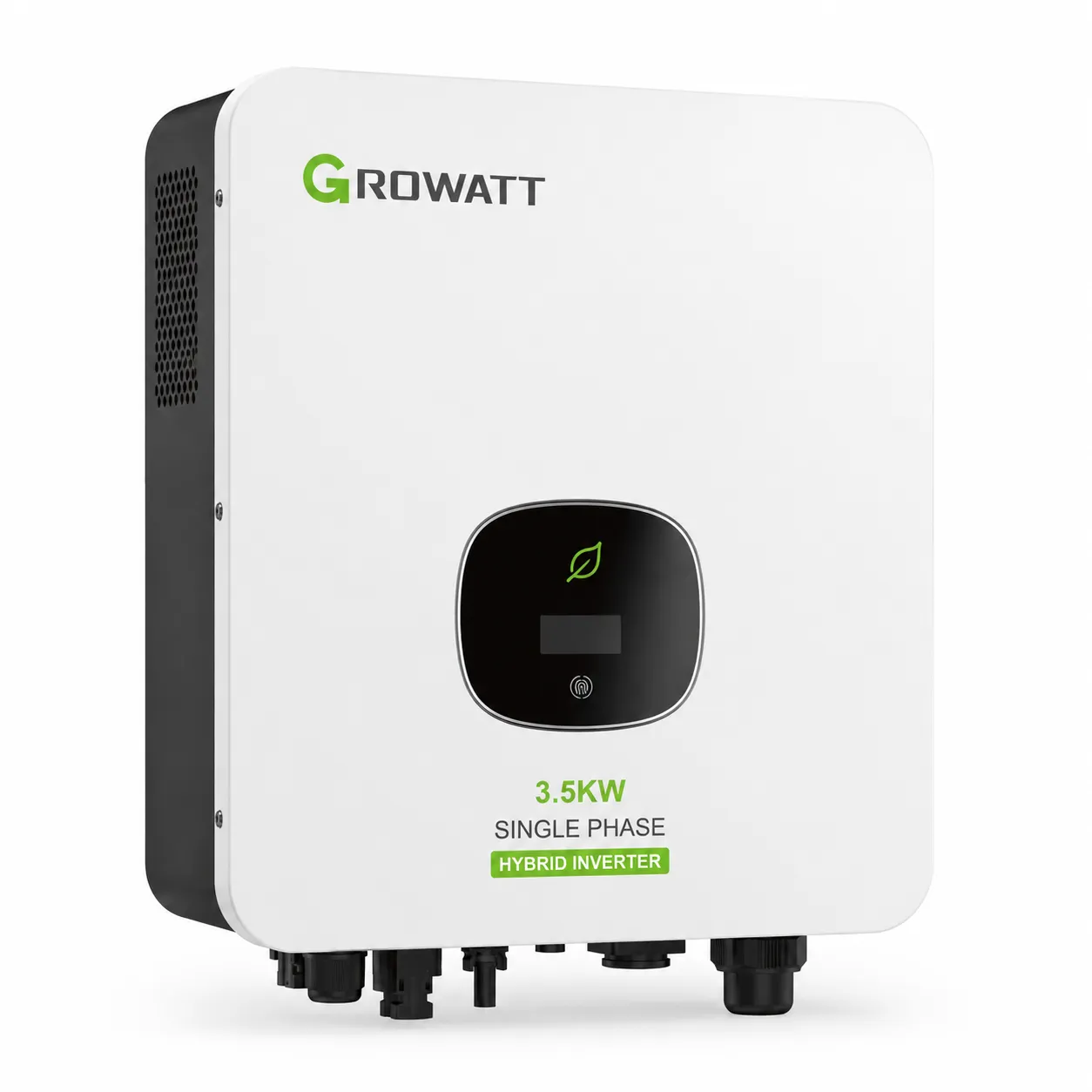
Growatt 3.5KW Single Phase Hybrid Inverter IP21
Original price was: ₨ 85,000.₨ 79,000Current price is: ₨ 79,000. Free Shipping
The Growatt 3.5kW Single Phase Hybrid Inverter IP21 is a reliable and energy-efficient solar inverter. It is designed for residential and small commercial solar systems.
It has battery compatibility, support for WiFi monitoring, and stable backup performance during load shedding. It has advanced MPPT technology. It is ideal for homes looking to get the most out of their solar power and reduce their electricity bills.
Growatt 3.5kW Single Phase Hybrid Inverter IP21 – Is It Worth Your Money?
Let me take you back to the evening of a Tuesday in July. Load shedding hits at 7 PM right when you’re cooking dinner, the kids are doing homework, and your wife is on a call. The UPS stops working. The fans stop. And you’re sitting there in the dark, sweating, wondering why you waited so long to go solar.
That moment right there? That’s what pushed me and, honestly, thousands of households across Pakistan to finally get serious about solar. In addition, the Growatt 3.5kW Single-Phase Hybrid Inverter with IP21 protection kept coming up repeatedly as I began researching inverters. So I dug deep. Talked to installers. Checked forums. Compared specs. Here’s everything I found: the good, the frustrating, and the stuff nobody tells you upfront. This inverter plays a major role in the solar system price in Pakistan.
What Even Is a Hybrid Inverter? (Simple, Quick Version)
If you already know this, skip ahead. But if you’re new to solar, here’s the 30-second version.
A basic on-grid inverter converts solar energy and feeds it either to your home or to the grid. No battery. No backup. When load shedding hits, you’re done.
A hybrid inverter is different. It does three things at once: pulls power from your solar panels, charges your battery, and manages the grid connection. Therefore, when load shedding begins, it seamlessly transitions to solar and battery power, frequently in milliseconds. You barely notice the transition. That’s the whole point of going hybrid. And the Growatt 3.5kW is one of the entry points into that world.
Who is the Growatt 3.5kW IP21 intended for?
This is the question most product pages skip entirely. They just give you specs and leave you to guess. Here’s who this inverter makes sense for:
A small household with moderate load. Think 2–3 bedrooms, a few fans, lights, a small fridge, and maybe one AC running occasionally. If you’ve got a 3–5 marla house and you’re not running two inverter ACs simultaneously, the 3.5kW output is genuinely enough.
Someone doing an indoor installation. The IP21 rating is what matters here. IP21 means it’s protected against vertical water droplets and limited dust fine for a utility room, a covered veranda, or inside your meter room. It is not for rooftop or direct outdoor exposure. That’s IP65 territory.
A budget-conscious first-time buyer. The 3.5kW IP21 sits at the more accessible end of the Growatt SPH/SPE lineup, which means lower upfront cost without sacrificing too much on features.
You should probably look into the 5kW or 6kW IP65 variant instead if your house is larger, you have multiple air conditioners running, or the area where you install them is exposed to heat and dust. The IP21 is specifically an indoor unit.
Key Features: What You Actually Get
Let me walk through what matters. Not every spec, just the ones that affect your daily life.
Dual MPPT Trackers
MPPT stands for Maximum Power Point Tracking. In plain English, it’s the technology that makes sure your solar panels are always operating at peak efficiency, even when clouds roll in or one part of your roof is partially shaded.
The 3.5kW Growatt hybrid has two independent MPPT inputs. This indicates that you are able to have panels oriented in two distinct directions, such as one string oriented east and another string oriented south, and that each string is optimized independently. This is a real advantage if your roof isn’t perfectly oriented. Most budget inverters only have one MPPT, so this is a genuine plus.
Up to 97.5% Conversion Efficiency
This number indicates how much of the solar energy that hits your panels is actually converted into electricity that can be used in your home. The Growatt 3.5kW hits around 97-97.6% efficiency, which means you’re losing very little in the conversion process. For context, anything above 95% is considered solid for a residential inverter.
Battery Compatibility – Lithium and Lead-Acid
This is important. The inverter works with both lithium (LiFePO4 and standard lithium-ion) and older lead-acid/AGM/gel batteries. So if you’re upgrading an existing system that has lead-acid batteries, you don’t necessarily have to replace the whole battery bank right away.
Having said that, if you buy new, choose lithium. Longer lifespan, deeper discharge, lighter, and better performance in heat. Growatt’s own LiFePO4 batteries pair well with this unit, but it also plays nicely with third-party options.
Output of Pure Sine Waves
This matters more than most people realize. A pure sine wave output means the electricity your inverter produces is clean and stable – safe for sensitive electronics like laptops, LED TVs, medical equipment, and inverter ACs. Cheap modified sine wave inverters can damage equipment over time. The Growatt produces clean power.
EPS / Backup Function
EPS stands for Emergency Power Supply. When the grid goes down, the inverter automatically switches to solar + battery mode. The switchover time is very fast – typically under 10–20 milliseconds – which is fast enough that most devices don’t even blink. Computers might not restart. Your router stays up. That’s the kind of seamless experience you’re paying for.
ShinePhone App Monitoring
Growatt’s monitoring app – ShinePhone – connects via WiFi and gives you real-time data on how much solar you’re generating, how much battery you have, and what your home is consuming. Working modes can be set, historical data can be checked, and even alerts can be sent. It’s not the most polished app in the world, but it works reliably, and it’s free.
Natural Cooling (No Fan)
No fan means no moving parts that can fail, and no noise. The inverter uses passive convection cooling – heat escapes through the casing naturally. Works well for indoor installation in a reasonably ventilated space. If you’re in a sealed, hot room with no airflow, keep that in mind.
What the IP21 Rating Is and Why It Matters
This is the one thing I see people misunderstand constantly in WhatsApp groups and Facebook solar forums.
IP21 means:
- 2 = Protection against solid objects larger than 12.5mm (like fingers). No full dust protection.
- 1 = Protection against vertically dripping water only.
So it handles incidental water drips – like a leaky pipe above it – but it’s not weatherproof. Rain, outdoor humidity, roof dust, direct sun exposure? No. That’s not what this unit is designed for.
The IP21 Growatt belongs indoors. A utility room, a covered equipment shelf, inside the house near the distribution board. That’s where it thrives.
If your plan is to mount it outside on the wall next to your solar panels, get the IP65 version. Paying a bit more upfront saves you from a very expensive repair or replacement down the line – especially in a climate like Pakistan’s, where summer dust storms and monsoon humidity are a real thing.
Installation – What to Expect
This is where things get real. The inverter itself isn’t complicated, but the installation matters enormously.
An average installation consists of:
- Installation of the panels on the roof, typically 4 to 8 panels for a 3.5 kW system
- DC cabling from panels to the inverter
- Battery connection: the inverter connects to your battery bank
- AC connection to your home’s distribution board
- WiFi setup and app configuration via ShinePhone
The whole process takes a professional installer about 4-6 hours for a clean job. Don’t let anyone rush it. Cables need proper sizing, connections need to be secure, and the inverter settings (especially working mode and battery type) need to be configured correctly from day one.
One thing I heard from multiple people who had issues: the installer set the wrong battery type in the settings. Sounds minor. It’s not. Wrong battery type settings = incorrect charging voltage = reduced battery life or, in bad cases, overcharging. Before they leave, make sure your installer has set it up correctly.
Also – ask for a demo of the ShinePhone app on your phone before the installer goes. Don’t let them leave without confirming you can see live data.
Working Modes – How to Set It Up for Pakistan
The Growatt hybrid has multiple programmable working modes. Here’s how I’d think about it for a typical Pakistani household:
Solar First Mode – The inverter prioritizes using solar energy, stores excess in the battery, and only pulls from the grid when both solar and battery are insufficient. This is the sweet spot for most homes. Lowest electricity bill, best use of your panels.
Battery First Mode – Battery discharges first, then solar, then grid. Less common but useful if you have TOU (time-of-use) billing and want to discharge battery during peak tariff hours.
Grid First Mode – Grid powers the home first. Not what you want if you’re trying to save on electricity. Use this only as a fallback mode during battery maintenance.
For load-shedding-prone areas like Lahore, Rawalpindi, Multan, or any city running 6-10 hours of load shedding daily, Solar First is almost always the right call. You want every unit of solar going to work immediately.
Common Mistakes to Avoid
These have been gathered from actual installers and users. Learn from their pain.
1. Installing IP21 outdoors.
Already said it, saying it again. The IP rating is not a suggestion. You’ll be claiming a warranty on a unit that clearly shows water damage after one rainy season, which will void the warranty.
2. Undersizing the battery.
A 3.5kW inverter paired with a tiny 2.4kWh battery is like buying a good car and filling it with a cup of petrol. It’ll run, but you’ll be disappointed. For meaningful overnight backup, you need at least 5kWh of usable battery capacity. Growatt’s 5kWh LiFePO4 pack pairs well with this unit.
3. Skimping on solar panels.
The 3.5kW inverter can handle more panel input than 3.5kW of panels. Oversizing your solar array (e.g., installing 4–5kW of panels on a 3.5kW inverter) is actually smart – it means the inverter hits full output earlier in the morning and later in the evening when sunlight is lower. Many installers recommend a DC-to-AC ratio of 1.2–1.3.
4. Ignoring cable sizing.
Too-thin DC cable runs result in voltage drop and heat, lowering system efficiency and raising the risk of fire. This is the responsibility of the installer, but as the homeowner, inquire about the cable specifications.
5. Not registering the warranty.
There is a warranty process at Growatt. Register your product via their portal or through your dealer. Don’t assume it will happen by itself.
Real-World Performance – What Users Are Saying
The Growatt 3.5kW IP21 has a consistent theme in dealer feedback and Pakistani forums:
Quiet operation – No fan means no noise. People with the unit in a bedroom-adjacent utility room appreciate this.
Reliable switching: The EPS switchover is quick and easy during load shedding. Most users report no noticeable flicker.
App works, but could be better – ShinePhone gets the job done but occasionally has connectivity hiccups. A router reboot usually fixes it.
Handles heat well in Pakistan’s summer temperatures when installed indoors with sufficient ventilation. Growatt’s efficiency and features hold up well in comparison to alternatives in the same price range, making it a good value at the 3.5kW level.
One installer with over a decade of Growatt experience put it simply: it’s not the flashiest brand, but it’s consistently reliable, parts are available, and local support has improved significantly compared to a few years ago.
Growatt 3.5kW IP21 vs IP65 – Which Should You Buy?
Since this keeps coming up: FeatureIP21IP65Water ProtectionVertical drips onlyDust-tight + water jetsInstallation LocationIndoor onlyIndoor or outdoorPriceLowerSlightly higherBest ForUtility rooms, covered indoorRooftops, exposed walls
If you have a good indoor spot – covered, ventilated, away from direct exposure – the IP21 works perfectly and saves you a bit of money. If there’s any chance of dust, humidity, or rain reaching the unit, spend the extra and get IP65. Don’t gamble on it.
Is It Worth It?
Here’s my honest take.
The Growatt 3.5kW Single Phase Hybrid Inverter IP21 is a solid, well-specified unit for smaller homes doing an indoor installation. It covers the fundamentals: dual MPPT, high efficiency, clean output, fast switchover, battery flexibility, and smart monitoring. Growatt has been in the Pakistan market long enough that there’s a decent support network, parts availability, and a community of installers who know the product.
It’s not the premium option. It’s not Huawei or Sungrow in terms of software polish or brand perception. But for what it costs and what it does – it’s honest value.
The biggest mistake you can make isn’t buying this inverter. It’s buying any inverter and pairing it with a bad installation. Find an experienced, certified installer. Don’t let anyone cut corners on cable sizing, earthing, or configuration. The inverter is only as good as the system it’s part of.
Go solar. Stop funding LESCO or WAPDA for electricity your roof could be generating for free. The payback period has never been shorter, and the quality of systems at this price point has never been higher.
Your Tuesday evening in July doesn’t have to look like that anymore.
Have questions about sizing a solar system for your home, or comparing the 3.5kW to the 5kW or 6kW options? Drop them in the comments – happy to help you think it through.
Related products
-
Sale!

Knox Krypton Eco 4KW Hybrid Solar Inverter
Original price was: ₨ 85,000.₨ 82,000Current price is: ₨ 82,000.
Reviews
There are no reviews yet.